![Single-family house in [market_city] NJ](https://image-cdn.carrot.com/eyJidWNrZXQiOiJwcm9kdWN0aW9uLmNhcnJvdC11cGxvYWRzLm9uY2Fycm90LmNvbSIsImtleSI6InVwbG9hZHMvc2l0ZXMvODI5MzgvMjAyNi8wOS9zaW5nbGUtZmFtaWx5LWhvbWUtaW4tbmV3LWplcnNleS5qcGciLCJlZGl0cyI6eyJyZXNpemUiOnsid2lkdGgiOjExNTJ9LCJ0b0Zvcm1hdCI6IndlYnAiLCJ3ZWJwIjp7InF1YWxpdHkiOjcwfX19)

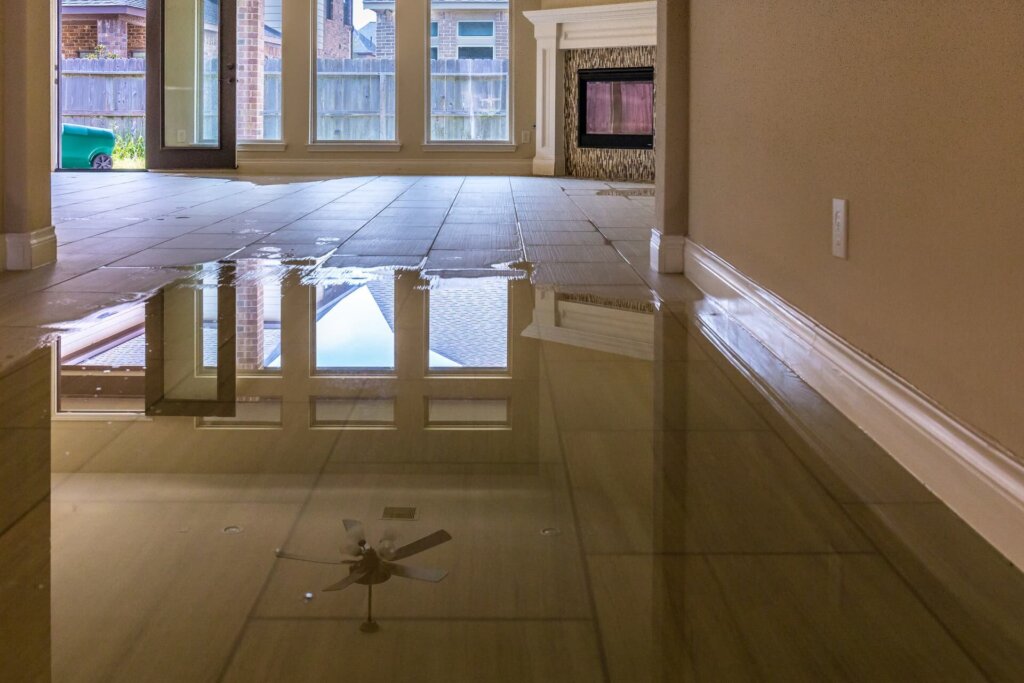
A pipe bursts behind the kitchen wall. The leak is repaired, but the floor still feels soft. Or perhaps the basement flooded during a storm, leaving a damp smell that returns whenever it rains. You want to sell the property, yet you do not know whether to spend money on restoration first.
You can sell a house with water damage in New Jersey. The difficult part is distinguishing what needs immediate attention from what a buyer may agree to repair after closing. Your insurance coverage, disclosure obligations, and the property’s condition can all change which selling options are realistic.
This guide explains what to do before marketing a water-damaged home in Marlton or elsewhere in New Jersey, how to compare repair costs with sale proceeds, and what an as-is or direct cash offer actually means.
Quick Answer: Can You Sell a House With Water Damage in New Jersey?
Yes. New Jersey homeowners can sell houses with past or existing water damage, including through an as-is listing or a direct sale. You must accurately complete applicable property-condition and flood-risk disclosures; an as-is contract does not erase those duties. Assess safety, document the damage, and compare repair-and-listing estimates with offers for the home in its present condition.
Identify the Water Problem Before You Price the House
A repaired pipe leak differs from recurring groundwater entry.
| Source | What a buyer may need to know |
|---|---|
| Burst pipe or appliance leak | Whether the source was fixed and hidden materials were dried |
| Roof or flashing leak | Whether water reached insulation, framing, or ceilings |
| Basement seepage | Whether the problem recurs and drainage work was completed |
| Storm or river flooding | Flood history, contaminated materials, and flood-zone information |
| Sewer backup | Whether professional cleaning and disinfection were necessary |
| Long-term condensation or humidity | Whether mold or concealed deterioration developed |
Separate the source, affected materials, and current condition. A dry stain differs from an active leak.
If the cause is unknown, ask a qualified inspector or repair professional to document it. Not every wet surface indicates structural damage.
Handle active damage safely
If water is still entering, prevent further damage when it is safe to do so. Avoid standing water near electrical equipment, and do not enter spaces that may have structural or electrical hazards. The EPA’s flood cleanup guidance explains why floodwater can contain sewage, chemicals, and other contaminants.
The EPA recommends drying wet materials within 24–48 hours, when possible, to reduce mold growth. That is a cleanup recommendation—not a promise that a house becomes mold-free after two days. For extensive water damage, sewage contamination, or suspected HVAC contamination, consider qualified professional help. See the EPA’s mold-cleanup guidance.
You need not complete cosmetic repairs to explore selling, but address urgent hazards.
New Jersey Water-Damage Disclosures: What Must Sellers Reveal?
Selling as-is does not mean selling without disclosure. New Jersey requires residential sellers to provide the applicable Seller’s Property Condition Disclosure Statement before the buyer becomes obligated under the purchase contract. The requirement also reaches sellers who are not represented by a real estate brokerage.
The New Jersey Department of Banking and Insurance’s explanation of the 2024 real estate law addresses that requirement. The Division of Consumer Affairs forms page lists the current disclosure documents, including a statement effective August 26, 2026. Use the current form rather than a saved older version.
The questions address issues relevant to water damage, including roof leaks, basement dampness, mold, and attempts to correct moisture problems. Respond according to the instructions and what you actually know. Keep dates, contractor invoices, photos, and reports available to support your answers.
Disclose relevant previous repairs, even if a stain was painted over. If you inherited the house and cannot explain a stain, state your knowledge limits and ask an attorney about uncertain answers.
Flood risk has its own mandatory disclosure
A burst supply line is not the same as a natural flood event. New Jersey separately requires specific flood-risk information before a buyer is bound by a real estate sale contract. The NJ Department of Environmental Protection’s Flood Disclosure Law page explains the requirements and provides access to its Flood Risk Notification Tool.
Sellers must address mapped flood-hazard status and questions about their actual knowledge of flood events, water intrusion, and claims as required by the form. A house outside a mapped high-risk area may still have a flooding history worth reporting. Check the FEMA Flood Map Service Center for official mapping information, while using NJDEP’s tool for New Jersey’s required disclosure questions.
Don’t substitute a generic “no warranties” clause for accurate answers. Have a New Jersey real estate attorney review the disclosures and contract, especially when damage is unresolved or the property has flooded repeatedly.
Does Water Damage Mean You Have Mold or Structural Problems?
Not necessarily. Damage may be cosmetic, or moisture may be concealed behind finishes.
Ask whether the leak continues, insulation stayed wet, framing weakened, or odors persist. Have a qualified professional evaluate suspected structural problems.
The EPA advises that mold control requires correcting the moisture source. Painting over mold or covering wet materials is not a durable repair. A musty smell alone does not prove a particular species or severity of mold; avoid making claims a professional has not established.
If a contractor recommends demolition or remediation, request an itemized scope that distinguishes urgent stabilization from finish work. A buyer may agree to replace flooring later, but unresolved sewage contamination or unsafe electrical conditions demand more immediate attention.
Can You Claim Water Damage on Homeowners Insurance Before Selling?
Possibly, but coverage depends on what caused the water loss, the policy, exclusions, deductibles, and claim timing. Review the policy and speak with your insurer before assuming an estimate will be reimbursed.
For example, sudden accidental damage from a burst pipe may be treated differently from gradual seepage or maintenance-related leakage. Standard homeowners policies generally do not cover flooding from rising external water. The National Flood Insurance Program explains why separate flood coverage often matters.
Ask your insurer about inspections before non-emergency work. Save photographs, loss dates, invoices, and evidence while taking safe steps to limit damage.
An open claim is not automatically money available at closing. Ask your insurer and attorney whether proceeds or lender interests affect settlement. Never promise a transfer without confirmation.
Even when a claim is denied or the repair cost is below the deductible, the loss history may remain relevant to seller disclosures. Keep the coverage decision and repair documentation together.
Repair First, List As-Is, or Sell Directly?
Your choice should depend on estimated net proceeds and the work you can realistically complete—not on the assumption that every damaged home needs a full renovation.
| Selling approach | Potential benefit | Main limitation |
|---|---|---|
| Repair, then list | May attract buyers looking for a move-in-ready home | Upfront expense, contractor delays, and uncertain price recovery |
| List as-is with an agent | Broadens buyer exposure without requiring a complete renovation | Inspections, buyer conditions, and financed-offer limitations may remain |
| Sell directly to an investor | May avoid the seller managing major repairs and traditional marketing | The purchase price may account for repairs, risk, and investor profit |
When repairing may be worthwhile
Consider repairs when the water source is identified, the scope is manageable, and the expected improvement in sale proceeds reasonably exceeds the work and additional carrying costs. A completed repair with permits or warranties, when applicable, can also help explain the history to a buyer.
Ask a local agent to evaluate the property before and after the proposed work. Get contractor estimates, including contingencies for damage discovered after opening walls. A projected renovated sale price is not a guaranteed outcome.
When an as-is listing may be reasonable
An agent can market a house in its current condition to buyers who accept repair responsibility. “As-is” usually addresses the negotiated condition and repair expectations; it does not remove disclosure duties or automatically waive the buyer’s inspection rights. The exact contract language matters.
For significant active damage, ask whether buyers can obtain financing. Fannie Mae’s property-condition guidance distinguishes minor deferred maintenance from deficiencies affecting safety, soundness, or structural integrity. Some loans may require corrective work or further review; rules differ by lender and loan type.
When a direct cash offer may be worth comparing
An investor may consider the property with an unfinished basement, damaged flooring, or an unresolved renovation budget. In evaluating a proposed price, the buyer may account for local comparable sales, remediation, permits, holding expenses, and uncertainty about hidden damage.
Read how cash home buyers calculate offers in Marlton to understand the assumptions behind an investor proposal. A cash offer can remove a mortgage-financing contingency, but title issues, inspections, contract terms, and closing costs still matter.
How Much Does Water Damage Affect the Sale Price?
No single statewide discount fits every damaged house.
Pricing reflects the repair scope, hidden-damage risk, flood-insurance costs, and financing or resale concerns.
For a useful comparison, request three figures: a realistic as-is listing estimate, an itemized repair budget, and a written direct offer if you want that option. Then calculate what each path could leave after sale expenses and pre-closing costs.
For broader expense categories, see New Jersey seller closing costs and our cash offer versus agent listing comparison in Marlton. Neither an advertised asking price nor a verbal investor estimate is the same as net proceeds.
Marlton Example: Comparing Repair Costs With an As-Is Sale
Imagine a homeowner in Marlton, within Evesham Township, who discovers water in the basement after heavy rain. The sump pump stops working, the carpet becomes saturated, and a restoration contractor recommends removing wet materials. The homeowner was already planning to sell and does not want to commit to a lengthy renovation.
They gather the plumber’s findings, photos, an insurer’s response, and two independent repair estimates. The estimates differ because one includes a drainage correction while the other focuses on replacing damaged finishes. Before comparing selling prices, the homeowner asks whether both estimates actually address the source of water entry.
An agent provides as-is and repaired-value ranges; an investor submits a conditional written offer.
For illustration only, suppose the repaired listing scenario projects a $360,000 sale price. After $30,000 in restoration, $13,000 in selling expenses, and $5,000 in additional holding costs, that leaves $312,000 before mortgage or lien payoffs. A direct offer of $310,000 with $3,000 in seller-paid expenses would leave $307,000 before the same payoffs.
The $5,000 difference is meaningful, but it does not determine the answer by itself. The seller should compare which expenses are fixed, whether the repair budget could increase, and whether either written offer has contingencies. Both estimates must also account for any costs already incurred—without subtracting the same expense twice.
All numbers are hypothetical, not Marlton market data or a J.O Properties transaction.
What should a Marlton seller check locally?
Contact Evesham Township’s Community Development office about any applicable permit, inspection, or resale questions for the particular property. Ask whether proposed drainage or basement reconstruction requires permits and whether previous work received final approval.
New Jersey’s statewide flood disclosures apply regardless of whether the property is near the coast. Avoid assuming a Marlton address proves—or rules out—flood risk. The relevant history, drainage conditions, and official mapping are more useful than broad claims about a neighborhood.
8 Steps to Sell a Water-Damaged House in New Jersey
- Address immediate hazards. Stop ongoing water intrusion when safe, and seek professional help for dangerous conditions.
- Document the history. Save photographs, repair invoices, claim correspondence, and inspection reports.
- Identify the source. Separate an isolated plumbing event from recurring flood or drainage problems.
- Review insurance. Check whether a claim is available, pending, or already resolved.
- Complete disclosures accurately. Use New Jersey’s current property-condition statement and required flood-risk information.
- Check local requirements. Confirm whether permits, inspections, or municipal documentation affect your transaction.
- Compare realistic numbers. Request an as-is valuation, repair estimate, and written direct offer if relevant.
- Review contract conditions. Clarify inspections, repair credits, sale expenses, possession, and the proposed closing date.
The New Jersey house-sale document guide covers common paperwork beyond the damage itself. If a timeline matters, our New Jersey move-out date guide explains why closing and possession should be agreed in writing.
Mistakes to Avoid When Selling a Water-Damaged Property
Covering stains without fixing moisture. Fresh paint can make a wall look better without resolving the condition that caused the damage.
Calling everything “flood damage.” An appliance leak and an external flood can have different disclosure and insurance implications. Describe the actual event.
Assuming as-is means no paperwork. New Jersey’s seller and flood-risk disclosures still require attention.
Using one repair estimate as a guaranteed final price. Concealed damage may appear only after wet walls or flooring are opened.
Accepting a high verbal offer without examining conditions. Ask whether the price can change after inspection and who pays closing expenses. Our guide to comparing South Jersey cash buyers provides additional contract questions.
Ignoring active safety problems. An impending sale is not a reason to leave hazardous standing water, electrical risks, or contaminated materials untreated.
Frequently Asked Questions
Can I sell a house with water damage in New Jersey?
Yes. You can generally sell a water-damaged house in New Jersey as-is, provided you meet applicable disclosure obligations. Buyers may request inspections, negotiate repair credits, or purchase the property in its existing condition.
Do I have to repair water damage before selling my house?
Not necessarily. You can repair the damage, list the property as-is, or seek a direct buyer. Address urgent safety hazards and compare repair estimates with your expected net proceeds before deciding.
Must I disclose a previously repaired basement leak in New Jersey?
Disclose known conditions and previous repairs as required by New Jersey’s current seller disclosure form. Keep relevant repair records and describe the work accurately. Selling as-is does not eliminate applicable disclosure obligations.
Do I need to disclose flood risk if my house is outside a FEMA flood zone?
Yes. New Jersey requires sellers to complete applicable flood-risk disclosures, including mapped flood-hazard information and known flooding history. Being outside a mapped high-risk flood zone does not remove these requirements.
Will homeowners insurance cover water damage before I sell?
Coverage depends on your policy and the cause of the damage. Sudden plumbing leaks may qualify, while external flooding is generally excluded from standard homeowners policies. Confirm coverage with your insurer.
Can buyers get a mortgage on a water-damaged house?
Sometimes. Mortgage eligibility depends on the property’s condition and the loan program. Significant safety, structural, or habitability problems may require repairs or additional lender review before financing is approved.
How much does water damage reduce a home’s selling price?
There is no standard discount. The impact depends on repair costs, damage severity, financing concerns, and local comparable sales. Compare an as-is offer with estimated proceeds after repairs and selling expenses.
Can I sell a water-damaged house as-is in Marlton, NJ?
Yes. You can explore an as-is listing or ask a direct buyer such as J.O Properties whether it will consider your home. Confirm applicable New Jersey disclosures and Evesham Township requirements before selling.
Explore Your Options for Selling a Water-Damaged House in New Jersey
You do not have to choose between concealing the problem and completing a full renovation. Document the source, address immediate hazards, understand your disclosure responsibilities, and compare the financial and practical terms of available selling routes.
J.O Properties helps homeowners explore direct sales of properties that need work, including homes with water damage. Share what happened, which repairs were completed, and what remains unresolved. The team can review whether a potential cash offer is appropriate; you can compare any proposal with an as-is listing or repair-first estimate before deciding.
Call (609) 546-4059 to discuss your property. Requesting information does not obligate you to accept an offer.
Disclaimer: This article offers general information, not legal, insurance, tax, structural, or financial advice. Requirements and coverage depend on the property and circumstances. Consult qualified New Jersey professionals about your specific situation.